Back in 2016, I was knee‑deep in spreadsheet hell. My team at a boutique e‑commerce agency spent weeks manually segmenting customer data, A/B testing subject lines, and tweaking ad bids. Our ROI was decent, but the process felt like trying to fill a swimming pool with a teaspoon. Fast forward to today, and I now oversee a marketing department that leverages AI marketing tools daily.
The transformation isn’t magic; it’s the result of thoughtful integration, realistic expectations, and a healthy respect for both technology and human intuition. Below, I’ll walk you through what AI marketing tools truly deliver, where they shine, where they stumble, and how you can harness them without losing your brand’s soul.
What Exactly Are AI Marketing Tools?
At its core, an AI marketing tool uses machine learning (ML), natural language processing (NLP), predictive analytics, and sometimes computer vision to automate, optimize, or enhance marketing tasks. Unlike simple set‑and‑forget automation (think scheduled social posts), modern AI tools learn from data. They spot patterns, make predictions, and adjust actions in real time.
Where AI Is Revolutionizing Marketing (Real Examples Included)
1. Hyper‑Personalized Customer Experiences
Gone are the days of “Dear Valued Customer” emails. Today, AI dissects a user’s browsing history, purchase behavior, demographics, and even sentiment from support chats to deliver bespoke content.
Case Study: A mid‑size skincare brand I consulted for implemented an AI‑driven recommendation engine. Previously, their “You May Also Like” suggestions were generic. After integrating AI, the engine analyzed skin‑type data entered during checkout, past purchases, and even seasonal changes (e.g., recommending SPF in summer).
Result? Cart abandonment dropped 18%, and average order value rose 22% within three months.
Key Tools: Dynamic recommendation engines (e.g., similar to Amazon’s “Frequently bought together”), personalized email platforms.
2. Predictive Analytics & Lead Scoring:
Identifying which leads are most likely to convert used to be a mix of gut feeling and basic demographics. AI changes that entirely.
AI models ingest historical conversion data, engagement metrics (email opens, page dwell time), and even external factors (like industry trends) to assign a lead score. Sales teams then prioritize high‑scoring leads, slashing follow‑up time.
Real‑World Insight: A SaaS company I worked with deployed predictive lead scoring. Before AI, their sales team chased 200 leads per month. Post‑implementation, they focused on the top 30 AI‑ranked leads. Conversion rates jumped from 4% to 31%. The sales team’s productivity doubled overnight.
3. Content Creation & Optimization
AI isn’t replacing copywriters yet. Instead, it accelerates the creative process. Tools can generate blog outlines, suggest SEO‑friendly headlines, or even draft product descriptions. The human writer then refines, adds brand voice, and injects creativity.
My Experience: We use an AI content assistant for our client’s blog calendar. It proposes 10 headline variations for a “sustainable home cleaning” post, predicts which will rank best on Google, and suggests related keywords. I, as the writer, choose the top three, write the piece, and the AI runs a readability score. It saves us up to 4 hours per article.
Important Note: Never publish AI‑generated copy verbatim. Google’s Helpful Content Update penalizes low‑quality, AI‑only content. Human editing is non‑negotiable.
4. Programmatic Advertising & Real‑Time Bidding
Programmatic ad buying uses AI to purchase ad inventory across thousands of websites in milliseconds, bidding only for users who match your ideal customer profile. It analyzes user data, context, and even competitor activity to decide when and where to show your ad.
Result: A local restaurant chain we manage saw a 35% lower cost‑per‑acquisition (CPA) after switching from manual Facebook ads to programmatic AI‑driven campaigns. The AI identified undervalued placements (e.g., food‑blog comment sections) that human planners would never have considered.
5. AI‑Powered Chatbots & Customer Service
Modern chatbots are far beyond “How can I help you today?” scripts. NLP‑enabled bots understand complex queries, resolve issues autonomously, and escalate only when necessary.
Example: A telecom client deployed an AI chatbot for after‑hours support. It now handles 68% of routine inquiries (bill questions, plan changes) without human intervention. Customer satisfaction scores actually improved because response times dropped from 20 minutes to under 30 seconds.
The Benefits? Undeniable.
- Speed & Scale: Process terabytes of data in seconds.
- Cost Efficiency: Reduces manual labor on repetitive tasks.
- Data‑Driven Decisions: Removes guesswork; decisions are grounded in analytics.
- Improved ROI: Campaigns become more targeted, wasting fewer dollars.
- 24/7 Operation: No coffee breaks, no sick days.
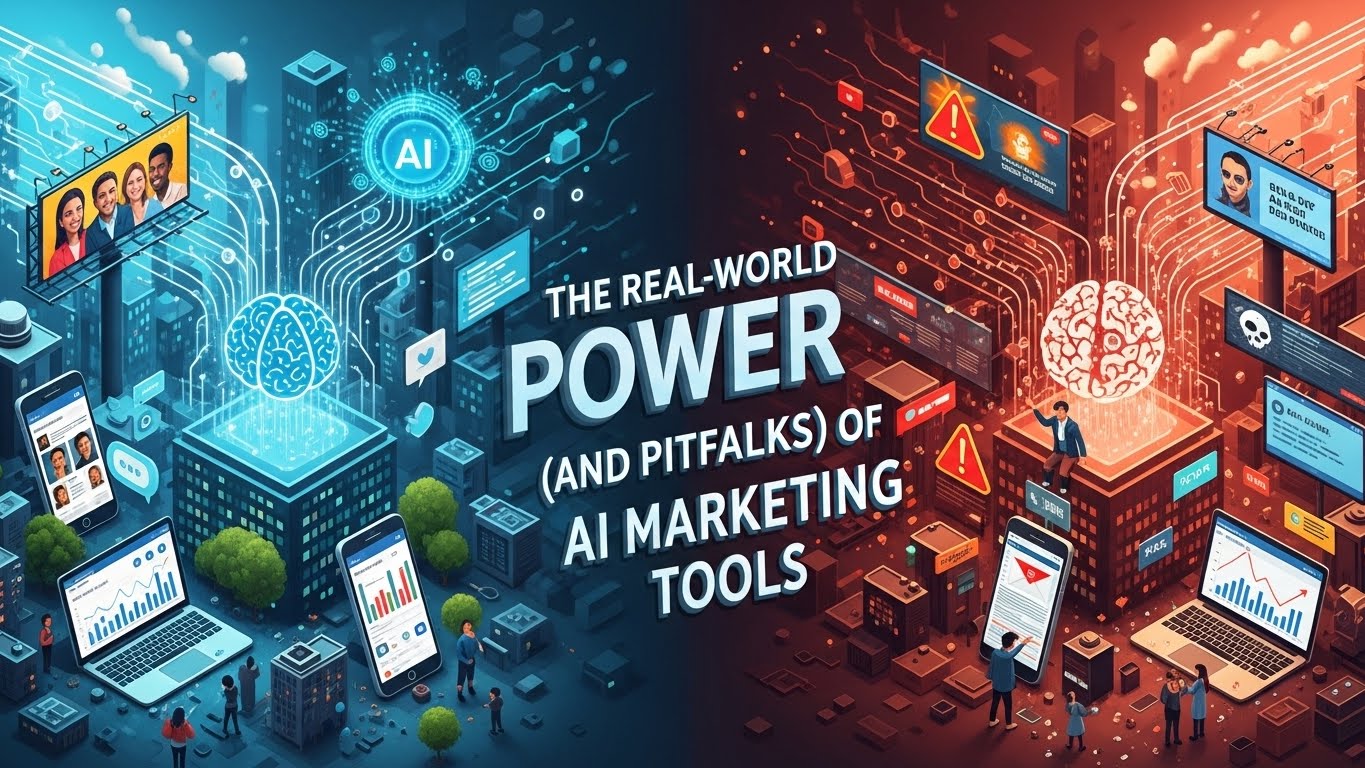
But Beware The Pitfalls & Limitations

AI isn’t a silver bullet. Over‑reliance leads to disaster.
1. Garbage In, Garbage Out (GIGO)
AI is only as good as the data you feed it. If your CRM has outdated or incomplete records, the AI will make flawed recommendations. I once saw a retailer’s AI start promoting winter coats in July because their inventory data hadn’t been refreshed!
Fix: Cleanse data regularly. Invest in a solid data governance plan.
2. Loss of Human Touch
A chatbot that misinterprets “I’m upset” as “I need a discount” can infuriate customers. Over‑automated email flows feel robotic.
Best Practice: Set clear escalation rules. Always give users an easy “Talk to a human” button.
3. Bias in Algorithms
AI learns from historical data. If past marketing efforts excluded certain demographics, the AI will perpetuate that bias.
Real incident: A fintech startup’s AI loan‑approval tool was inadvertently rejecting female applicants because historical data (from pre‑2010) showed fewer women received loans. They had to audit and retrain the model.
Solution: Conduct bias audits quarterly. Use diverse training datasets.
4. Privacy & Compliance Risks
Using customer data for AI personalization must comply with GDPR, CCPA, and other regulations. Failing to obtain proper consent can result in massive fines. Never hide data collection behind opaque privacy policies. Be transparent: “We use AI to personalize your experience. Opt‑out here.”
Best Practices for Implementing AI Marketing Tools:
- Start Small
Pilot one tool (e.g., AI email subject‑line optimizer) before overhauling your entire stack. Measure results for 60 days. - Integrate, Don’t Silo
Ensure AI tools talk to your CRM, email platform, and analytics suite. Disconnected tools create data gaps. - Maintain Human Oversight
Every AI output should be reviewed by a human. Think of AI as a “first draft” generator. - Train Your Team
Marketers need to understand how the AI works, not the code, but the logic. Run workshops; demystify the tech. - Prioritize Ethics
- Disclose AI use where required (e.g., “You’re chatting with an AI assistant”).
- Allow easy opt‑outs.
- Regularly audit for bias.
The Future of AI in Marketing (2026 & Beyond)
- Generative AI for Video: Tools now create short, brand‑consistent video ads from a simple text prompt. Expect this to explode in social media advertising.
- Voice & Audio Search Optimization: AI will help brands craft content specifically for voice queries (“Hey Google, where’s the nearest vegan café?”).
- Predictive Lifecycle Marketing: AI will anticipate a customer’s next move before they do, e.g., sending a re‑engagement offer the moment they show signs of churn.
- Emotional AI: Emerging tools analyze vocal tone or facial expressions (via webcam) to gauge sentiment. Use cases are still ethical minefields, but the tech exists.
Conclusion
AI marketing tools are no longer a futuristic concept; they’re a present‑day necessity for competitive brands. When deployed thoughtfully, they supercharge efficiency, deepen personalization, and unlock unprecedented insights. Yet, the human element remains irreplaceable. The most successful marketers use AI as a co‑pilot, not the pilot. Embrace the tech, but keep your humanity front and center. That balance is the true secret sauce.
FAQs
1. Are AI marketing tools expensive?
Not necessarily. Many platforms (e.g., HubSpot, Mailchimp) now include basic AI features in mid‑tier plans. Enterprise‑grade tools can cost $500+/month, but the ROI usually justifies it. Start with a free trial.
2. Can AI completely replace marketers?
No. AI handles data crunching and repetitive tasks, but creativity, strategy, empathy, and brand storytelling still require human brains.
3. How do I choose the right AI marketing tool?
Identify a specific pain point (e.g., low email open rates). Then, look for tools that solve that problem. Read case studies, request demos, and ensure it integrates with your existing stack.
4. Is my customer data safe with AI tools?
Reputable vendors prioritize data security (encryption, compliance certifications). Always read their security policy and confirm GDPR/CCPA compliance before signing up.
5. How long does it take to see results after implementing AI?
Most teams notice measurable improvements (e.g., higher click‑through rates) within 4–8 weeks. Full ROI analysis usually takes 3–6 months.
6. Do I need technical skills to use AI marketing tools?
No. Modern tools are designed for marketers, not data scientists. A basic understanding of analytics is helpful, though.
7. Can AI help with SEO?
Absolutely! AI tools analyze keyword trends, suggest content gaps, optimize on‑page elements, and even predict ranking changes after an algorithm update

Related Posts