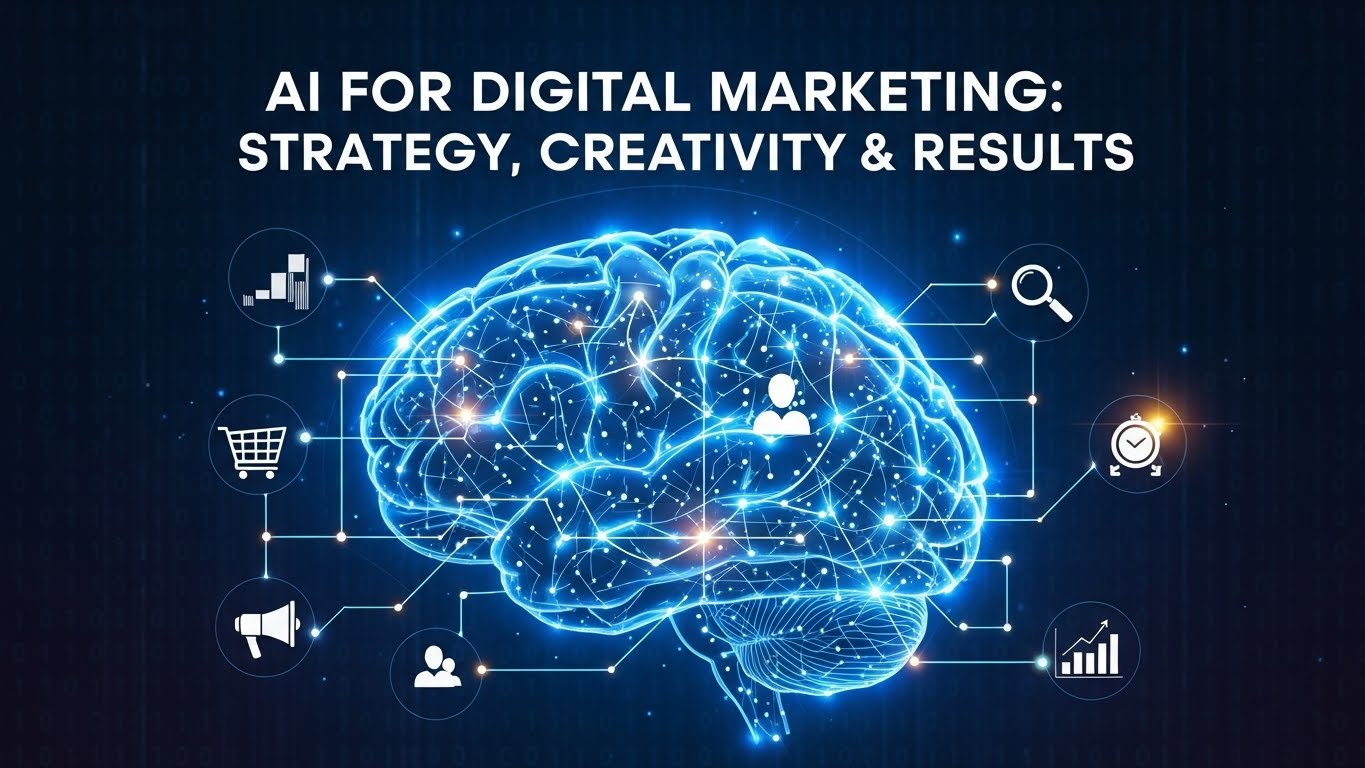
Over the past decade, I’ve navigated the ever-shifting landscape of digital marketing from the early days of basic Google Ads campaigns to the sophisticated, data-driven ecosystems we see today. One transformation that has truly reshaped the field is the integration of Artificial Intelligence (AI).
It’s no longer a futuristic concept; AI is now an indispensable tool sitting right beside my analytics dashboards, content calendars, and ad platforms. In this article, I’ll share my hands-on experience, real-world case studies, and practical insights into how AI is revolutionizing digital marketing, its benefits, pitfalls, ethical considerations, and where it’s headed.
The Evolution: From Guesswork to Precision
When I started in digital marketing (circa 2012), campaigns relied heavily on intuition, manual data crunching, and broad audience segments. A/B testing a headline meant creating two versions, waiting days for results, and hoping one performed better. Fast forward to today: AI analyzes millions of data points in seconds, predicts trends, personalizes experiences at scale, and even drafts creative copy.
The shift began around 2018 when platforms like Google Ads and Facebook introduced AI-powered bidding and audience targeting. Marketers who embraced it saw immediate ROI improvements. For instance, a mid-sized e‑commerce client I worked with switched from manual CPC bidding to Smart Bidding (Google’s AI tool). Within three months, their cost-per-acquisition (CPA) dropped by 28%, while conversions rose by 15%. That was my aha moment. AI wasn’t just hype; it delivered results.
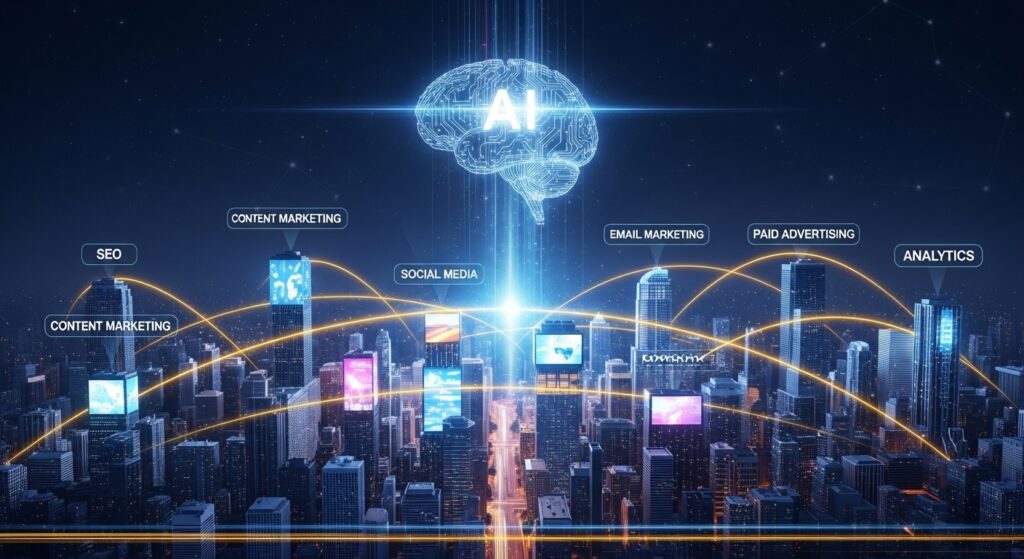
Key Areas Where AI Supercharges Digital Marketing:
1. Data Analysis & Predictive Analytics
Digital marketing generates colossal amounts of data, including click-through rates, bounce rates, session durations, demographic info, social engagement, etc. Humans can’t process this volume efficiently. AI steps in to identify patterns, anomalies, and future trends.
- Predictive Customer Lifetime Value (CLV): Using historical purchase data, AI predicts how much a customer will spend over their relationship with your brand. I implemented this for a subscription box service. The AI model flagged high-CLV customers, allowing the team to allocate retention budgets strategically. Churn rates dropped by 12% in six months.
- Forecasting Campaign Performance: Before launching a Black Friday campaign, AI tools (like Adobe Sensei or IBM Watson) can simulate outcomes based on past data, budget, and market conditions. This prevents overspending and optimizes budgets.
2. Hyper-Personalization at Scale
Generic “Dear Customer” emails are relics. AI enables real-time, individualized experiences for every user.
- Dynamic Content: AI analyzes a user’s browsing behavior, purchase history, and even weather location to serve tailored content. For example, a travel agency I consulted for used AI to show users flight deals to destinations they’d recently searched for, resulting in a 22% increase in booking conversions.
- Email Marketing: Tools like Mailchimp’s Predictive Analytics or HubSpot use AI to determine the best send time, subject line, and content for each recipient. One of my clients saw open rates jump from 18% to 34% after switching to AI-optimized emails.
3. Content Creation & Optimization
AI isn’t replacing copywriters (yet!), but it’s becoming an invaluable collaborator.
- Content Ideation & SEO: Tools like Clearscope, MarketMuse, or SurferSEO use AI to analyze top-ranking content for your target keywords. They identify missing topics, semantic keywords, and optimal content structure. When I revamped a B2B SaaS blog using SurferSEO’s AI recommendations, organic traffic increased by 40% in four months.
- Generating Drafts: Platforms like Jasper or Copy.ai can draft social media posts, product descriptions, or blog outlines based on prompts. I use these to overcome writer’s block. The output isn’t publish-ready, but it saves hours of brainstorming.
- Pro Tip: Always add a human touch! AI lacks brand voice nuance.
4. Programmatic Advertising
Programmatic ad buying uses AI to automate the purchase of ad inventory in real-time, targeting the right user, at the right price, on the right platform.
- Real-Time Bidding (RTB): AI algorithms bid on ad spaces across millions of websites in milliseconds, considering user data, context, and budget constraints. A retail client using programmatic AI reduced wasted ad spend by 35% and doubled ROAS (Return on Ad Spend).
5. Chatbots & Customer Service
AI-powered chatbots handle up to 80% of routine customer inquiries 24/7.
- Example: A bank I worked with deployed a chatbot for FAQs (balance checks, transaction history, branch locations). The bot resolved 65% of queries instantly, freeing human agents for complex issues. Customer satisfaction scores rose because wait times plummeted.
6. Social Media Management
AI tools schedule posts, analyze engagement, suggest optimal posting times, and even identify trending topics. Tools like Buffer, Hootsuite’s AI features, or Lately AI turn long videos into bite-sized social clips automatically. During a product launch, an AI tool suggested trending hashtags we hadn’t considered, increasing post reach by 50%.
Benefits of AI in Digital Marketing
- Efficiency & Speed: Automates repetitive tasks (reporting, data entry, basic content drafting).
- Accuracy: Reduces human error in data interpretation.
- Scalability: Handles massive audiences and campaigns without additional manpower.
- Data-Driven Decisions: Moves marketing from “gut feeling” to evidence-based strategy.
- Enhanced ROI: Optimizes budgets in real-time for maximum returns.
Challenges & Limitations (From Real Experience)
- Data Quality: “Garbage in, garbage out.” AI is only as good as the data it’s trained on. Incomplete or biased data yields flawed results. I once saw an AI campaign underperform because the training data excluded mobile users, costing the client 20% of potential reach.
- Over-Reliance: Some teams become passive, trusting AI blindly. Always audit AI recommendations!
- Privacy Concerns: Using customer data requires strict compliance with GDPR, CCPA, etc. Transparency is key inform users how their data is used.
- Algorithmic Bias: If training data reflects historical biases (e.g., gender or racial stereotypes), AI will perpetuate them. Regularly audit AI models for fairness.
Ethical Considerations
Using AI responsibly isn’t optional; it’s essential.
- Transparency: Disclose when customers interact with AI (e.g., “You’re chatting with our AI assistant”).
- Consent: Obtain explicit opt-in for data collection and personalization.
- Avoid Manipulation: Don’t use AI to create addictive loops (e.g., endless scroll feeds designed to maximize time-on-site at the cost of user well-being).
The Future of AI in Digital Marketing
- Generative AI for Creative Assets: Tools like Midjourney (images) and Synthesia (AI video avatars) will let marketers create ads, visuals, and even video scripts from text prompts.
- Voice Search Optimization: As smart speakers grow, AI will optimize content for conversational queries.
- Predictive Sentiment Analysis: AI will scan social media in real-time to gauge brand sentiment and flag PR crises before they escalate.
Getting Started with AI (Practical Tips)
- Start Small: Begin with AI tools for reporting (e.g., Google Analytics 4’s AI insights) or email personalization.
- Upskill Your Team: Train marketers on AI literacy, not coding, but understanding outputs and limitations.
- Choose the Right Tools: Match tools to goals. For SEO, use SurferSEO; for ads, use Google’s Smart Campaigns.
- Monitor & Iterate: AI models need tuning. Review performance weekly.
FAQs
1. Will AI replace digital marketers?
No. AI automates tasks, but strategy, creativity, empathy, and ethical judgment remain human domains. Marketers will evolve into “AI supervisors.”
2. Is AI marketing expensive?
Costs vary. Many platforms (Google Ads, Facebook Ads) include basic AI for free. Advanced tools start at ~$50/month. Small businesses can leverage free AI features first.
3. How can I ensure my AI tools comply with data privacy laws?
Choose tools certified for GDPR/CCPA compliance. Always anonymize data where possible and obtain clear user consent.
4. Can AI improve SEO?
Absolutely. AI analyzes SERPs, suggests keywords, optimizes content structure, and identifies technical SEO issues faster than manual audits.
5. What’s the best AI tool for email marketing?
For most users, Mailchimp (with its Predictive Analytics) or HubSpot offers robust, user-friendly AI features.

Related Posts