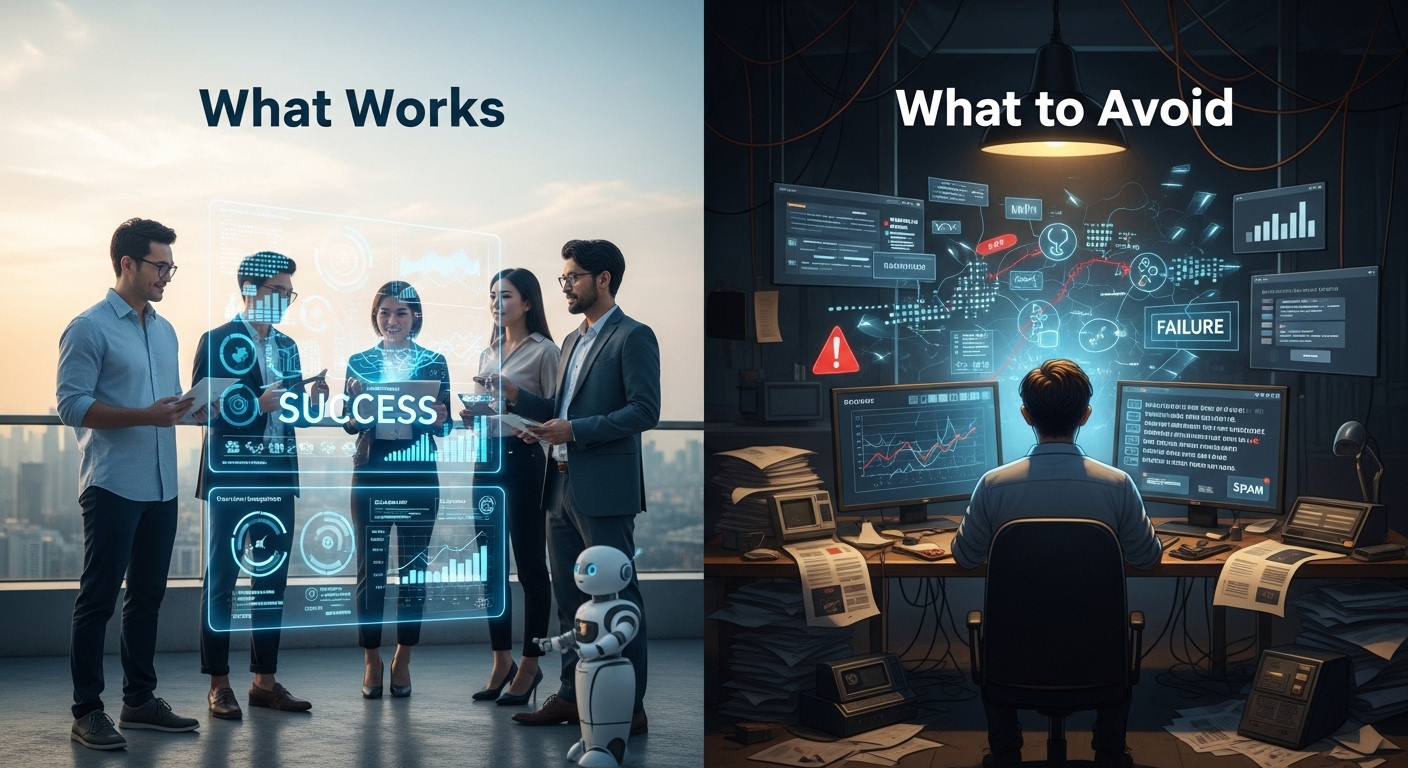
AI in marketing isn’t the future anymore; it’s the messy present. Teams are using machine learning to predict churn, tune bids, personalize emails, and speed up creative production, often all at once. At the same time, marketing is being squeezed from both sides. customer attention is harder to earn, and privacy rules (plus cookie changes) keep shrinking the data marketers used to rely on.
The smartest AI‑powered marketing strategies aren’t about sprinkling automation on top of an old playbook. They’re about building a system: better inputs (data), better decisions (models), faster execution (workflows), and tighter measurement (incrementality). Below is a practical, research-driven view of how to do it without falling for hype.
What “AI‑Powered Marketing” Really Means:
In day-to-day marketing work, “AI” usually shows up in three forms:
- Predictive analytics (machine learning): forecasting conversion likelihood, churn risk, lead scoring, lifetime value (LTV).
- Natural language processing (NLP): understanding text reviews, support tickets, social posts, and open‑ended survey answers.
- Generative AI: producing drafts of copy, images, variations, summaries, and concept explorations.
A strong AI marketing strategy typically uses all three, but the foundation is still the same: customer understanding, sharp positioning, and clean measurement.
1) Start With a First‑Party Data Foundation (or AI Won’t Help Much)

AI models amplify whatever you feed them. If your data is patchy, outdated, or siloed across platforms, AI will automate the wrong decisions faster.
What to prioritize now:
- First‑party data: email engagement, purchase history, on-site behavior, app events, loyalty data, support interactions.
- A unified customer view: via CRM + data warehouse and/or a CDP (customer data platform), depending on your stack.
- Consent and governance: clear opt-ins, retention rules, and “who can use what” policies.
Realistic example:
A mid-size ecommerce brand might have email clicks in one system, orders in another, and support complaints in a third. AI-driven personalization will be blunt until those signals are tied to the same customer identity. Once unified, you can do useful things like suppress discount offers for customers likely to buy full price, or route unhappy customers into a win-back sequence that prioritizes service over sales.
SEO note: If you’re aiming to rank for “AI-powered marketing strategies,” the unsexy truth is: better data beats “smarter” tools nearly every time.
2) Use Predictive Models for Segmentation That Actually Change Decisions
Traditional segmentation (“women 25–34,” “visited twice”) is easy but often weak. Predictive segmentation uses behavior to estimate future outcomes: who will convert, who will churn, who will become high-LTV.
High-impact predictive segments:
- Propensity to purchase (next 7/30 days)
- Churn risk
- Expected LTV
- Discount sensitivity (who only buys on promo vs. who doesn’t need it)
- Next best product/category
Mini case study (typical pattern):
A subscription service discovers that sending a generic “We miss you” discount to all lapsing users cuts margin without reducing churn. With churn prediction, they reserve discounts for high-risk/high-value customers and instead send onboarding tips and feature education to medium-risk users.
Result: less promo spend, better retention, fewer people trained to wait for discounts.
3) Personalization at Scale: Useful, Not Creepy

Everyone wants “hyper-personalization.” Customers wish to be relevant without the uneasy feeling that a brand is watching their every move.
The most sustainable approach is contextual personalization plus preference-based personalization:
- Contextual: location, device, time, entry page, product category, referrer intent.
- Preference-based: explicit choices (sizes, styles, frequency, topics).
Where AI-powered personalization pays off:
- Email and SMS: send-time optimization, dynamic blocks (products, content), frequency capping.
- On-site/app: product recommendations, tailored navigation, personalized search results.
- Paid ads: creative rotation by segment, suppression lists, smarter retargeting windows.
Practical rule: If you can’t explain why someone is seeing a message in one sentence, it’s probably too much.
4) Journey Orchestration: Automation That Doesn’t Feel Automated
Marketing automation used to mean rigid drip campaigns. AI-driven journey orchestration is more responsive: it reacts to what customers do, predicts what they’ll do next, and triggers the right sequence.
Examples of AI-enhanced automation:
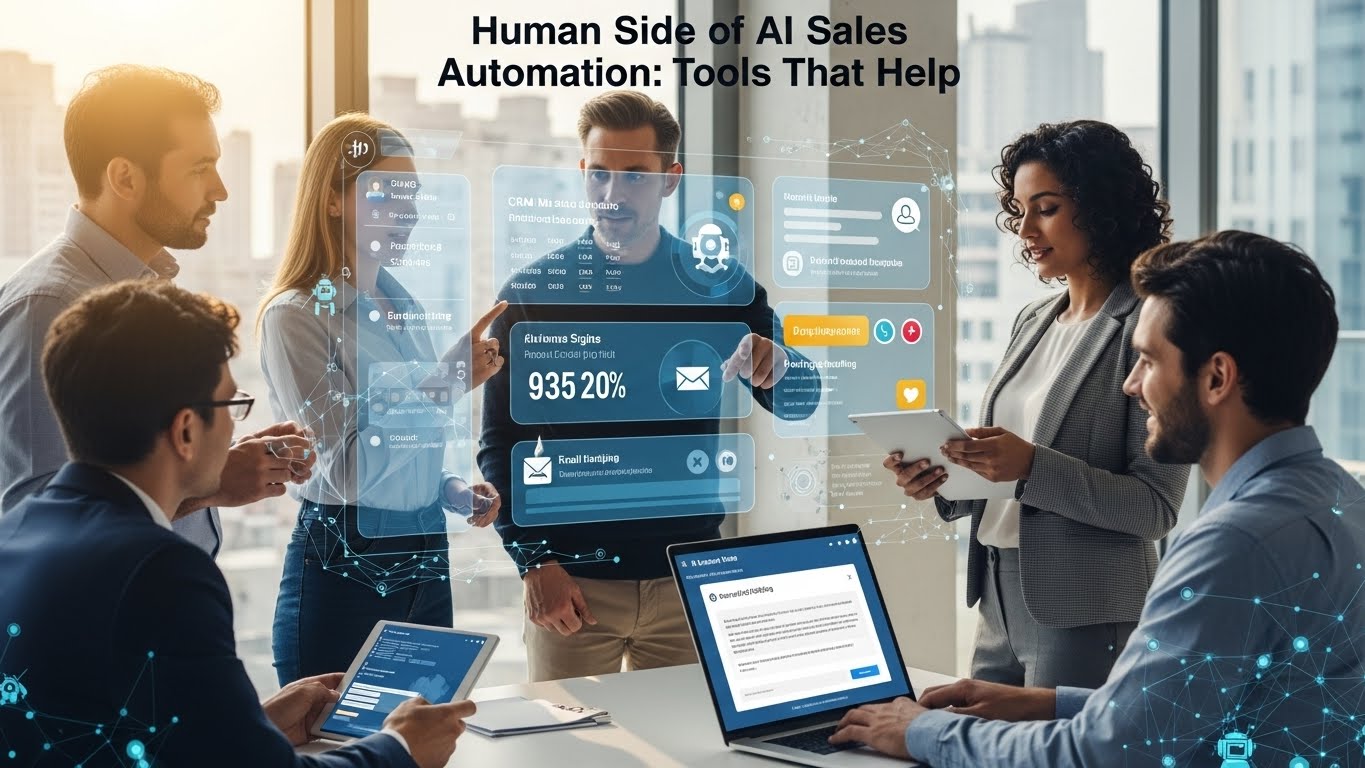
- Lead scoring: sales teams stop wasting time on low-intent leads.
- Next best action: route someone to onboarding, upsell, service recovery, or renewal.
- Channel choice: email vs. SMS vs. push based on responsiveness and fatigue.
What to watch: automation sprawl. If every team can spin up flows, you get overlapping messages and customer annoyance. A simple governance model, one owner per lifecycle stage, shared suppression rules, prevents chaos.
5) Creative and Content: Let AI Accelerate Variation, Not Replace Strategy
Generative AI can help marketing teams move faster, especially when you need dozens of variations across channels. But it’s not a substitute for brand judgment, compliance, or understanding customer psychology.
Best uses in real workflows:
- Drafting headline variations for A/B tests
- Creating ad copy tailored to different intents (comparison vs. “urgent need”)
- Summarizing research, reviews, and call transcripts into themes
- Producing first drafts of landing page sections that humans refine
Guardrails that matter:
- Maintain a brand voice guide (examples beat rules)
- Use a claims checklist (especially for health, finance, and legal)
- Don’t publish without a human review; errors scale fast
If you’ve ever had a campaign derailed by one sloppy claim or tone-deaf line, you already know why this matters.
6) Social Listening and Customer Insights With NLP:

NLP turns messy qualitative feedback into structured insight:
- Common complaint themes in reviews
- Sentiment shifts after a product change
- Emerging competitor mentions
- FAQ gaps that should become content
This is one of the most underrated AI marketing strategies because it improves both marketing and product decisions. It can also directly support SEO: the language customers use in reviews often becomes the best source of long-tail keywords and page copy.
7) Measurement: AI Helps, But Don’t Outsource Truth to a Dashboard
AI is excellent at pattern recognition, but marketing measurement is full of traps:
- attribution models that over-credit retargeting
- “lift” that’s actually seasonality
- platform-reported results that can’t be reconciled
Modern teams increasingly combine:
- Incrementality testing (holdouts, geo tests)
- Marketing mix modeling (MMM) for channel-level effects
- Clean-room approaches for privacy-safe matching
If you’re investing in AI-powered marketing, measurement is where you protect your budget and your credibility.
Ethical and Practical Risks (Worth Taking Seriously):
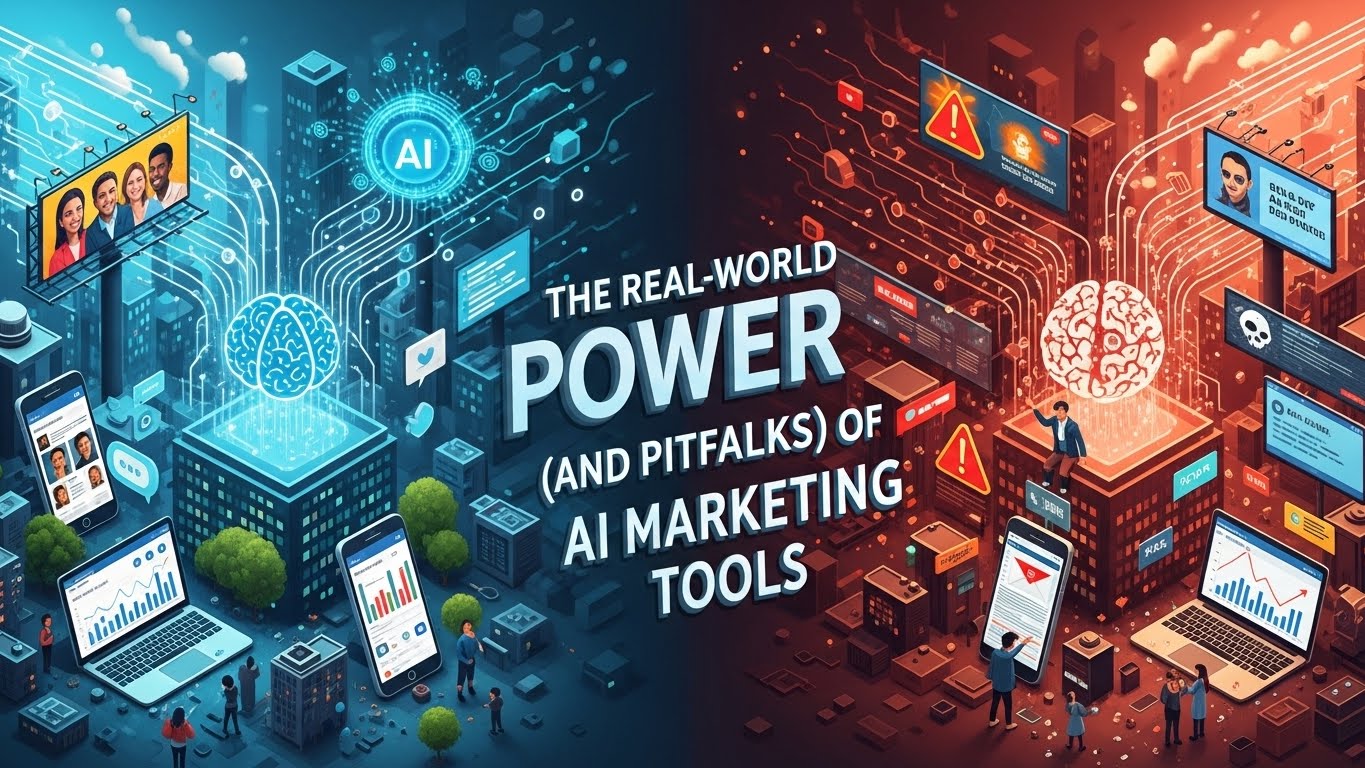
AI marketing can go sideways in predictable ways:
- Privacy violations: collecting too much, keeping it too long, unclear consent
- Bias: models that under-serve certain groups because historical data is skewed
- Brand safety: off-tone or misleading copy at scale
- Customer trust: personalization that feels invasive
A simple ethical baseline helps: minimize data, be transparent, give control (preferences), and audit outcomes.
A Simple 90‑Day Implementation Plan
Weeks 1–3: Foundation
- Audit data sources, consent, and tracking
- Define 3–5 business questions (e.g., reduce churn, increase repeat purchase)
Weeks 4–7: First Models + Quick Wins
- Build propensity/churn/LTV scores
- Pilot in one channel (email or paid retargeting)
Weeks 8–12: Scale + Measure
- Expand to on-site personalization or journey orchestration
- Run an incrementality test to validate uplift
- Document learnings and lock governance
FAQs
What are AI-powered marketing strategies?
They’re marketing approaches that use machine learning, NLP, and/or generative systems to predict behavior, personalize experiences, automate journeys, and improve measurement.
Do small businesses benefit from AI in marketing?
Yes, especially for email personalization, ad optimization, and customer insights if data tracking and goals are clear.
Is AI marketing only about automation?
No. The biggest gains often come from better targeting and decision-making, not just faster execution.
How do you avoid “creepy” personalization?
Use contextual signals and explicit preferences, avoid overly specific inferences, and make it easy to adjust settings or opt out.
Will AI replace marketers?
It tends to replace repetitive tasks and weak workflows. Strong strategy, positioning, and creative direction remain human-led.
What’s the biggest mistake teams make with AI marketing?
Starting with tools instead of outcomes, then automating decisions based on messy data and questionable measurement.

Related Posts