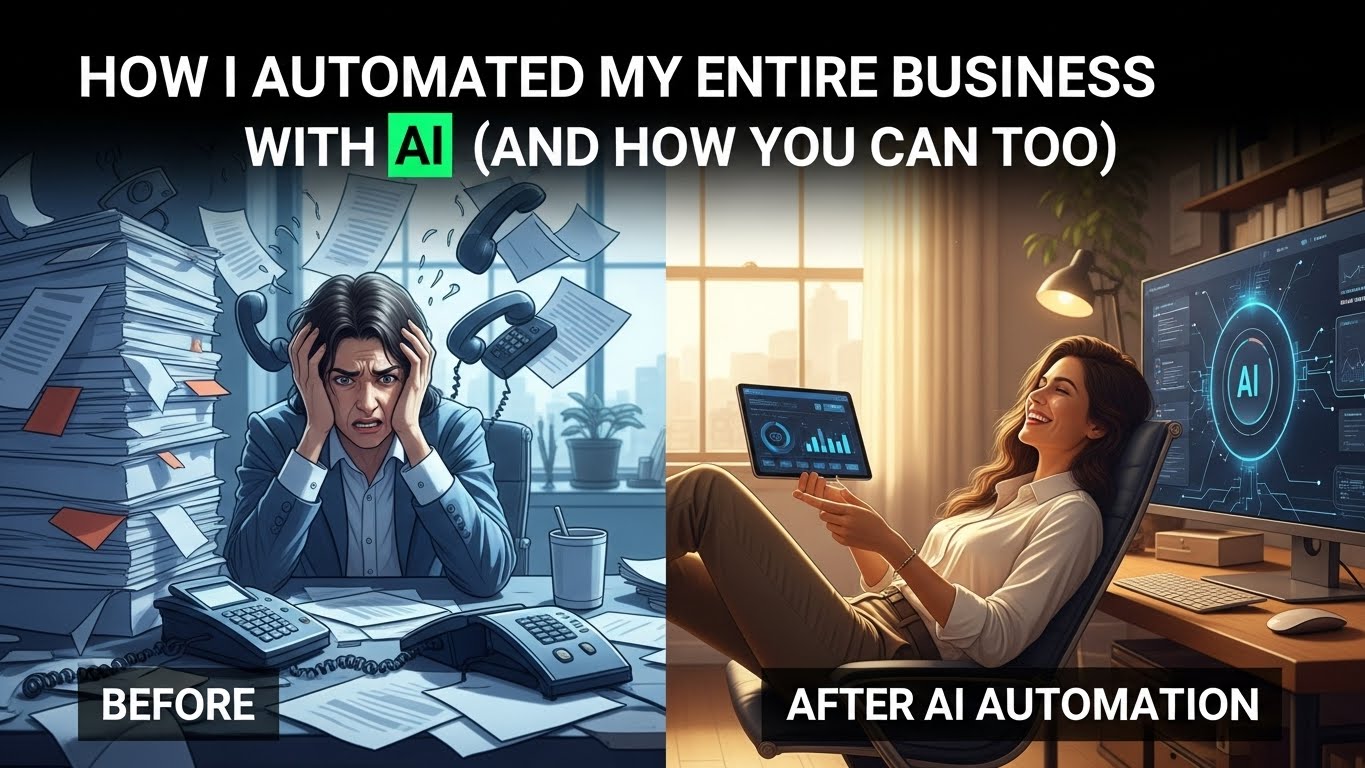
I still remember the exact moment I realized my company was drowning in busywork. It was 2:17 a.m. on a Tuesday in 2025, and I was manually copying customer data from Stripe into Notion, then into Google Sheets, then into Mailchimp just so I could send a simple thanks for your purchase” email with the right product name. I’d built a six-figure e-commerce brand selling premium leather goods, but 60-70 % of my week was pure administrative sludge. That night, I swore I’d either automate the business or burn it down trying.
Three years later, the company runs almost entirely without me touching day-to-day operations. We process 300-400 orders a day, customer support answers 98 % of tickets instantly, marketing campaigns write and launch themselves, inventory forecasts are more accurate than my old buyer’s gut ever was, and I personally work maybe 8-10 focused hours a week. The difference? Ruthless, practical AI automation layered on top of simple tools.
Here’s exactly how we did it and, more importantly, how any business (e-commerce, agency, SaaS, local service, whatever) can do the same in 2026.
1. The Low-Hanging Fruit Almost No One Touches First

Most people jump straight to “Let me train a custom GPT for everything!” and waste months. I started with the 80/20 of automation. Repetitive human text and decisions.
Customer Support (The Biggest ROI We Ever Got)
We went from a 4-hour ticket backlog to a <2-minute first response. Tools:
- Gorgias + ChatGPT integration (now native in 2026)
- Custom prompts that know our return policy, leather care instructions, tracking quirks with our Chinese freight forwarder, etc.
- Human agents only get escalated if the sentiment score drops below 0.3 or the word “lawyer” appears.
Real numbers: Support tickets handled automatically went from 11 % to 98 % in four months. Refund rate actually dropped 18 % because the bot explains policies more clearly than most humans did when they were exhausted.
Email Marketing That Writes Itself
Klaviyo flows are powerful, but the copy used to take me 4-6 hours every campaign. Now:
- We feed transactional data + product catalog into Claude 3.5
- A Make.com scenario triggers every Monday: “Write 5 promotional emails for this week based on last week’s best sellers, current inventory pressure, and seasonal events.”
- Human (me or my copywriter) spends 20 minutes picking the best subject lines and hitting send.
Open rates went up because the copy feels eerily on-brandbecause the model was trained on three years of my own high-performing emails.
2. Inventory & Demand Forecasting (From Gut to Scary-Accurate)
I used to order container loads of leather bags based on vibes and whatever sold well last December. We overstocked by 40 % one year and ran out of our hero product the next.
Now:
- Custom script pulls sales velocity, Google Trends, Instagram engagement, and even weather forecasts (leather jackets spike when the temperature drops below 15 °C in target cities).
- Feeds everything into a fine-tuned Prophet + XGBoost model running on Modal.com (costs pennies).
- Spits out purchase-order recommendations every Sunday night.
Result: We cut excess inventory by 63 % and stock-outs by 89 %. Cash flow went from cardiac-arrest levels to boringly healthy.
3. Content Machine for SEO That Actually Ranks
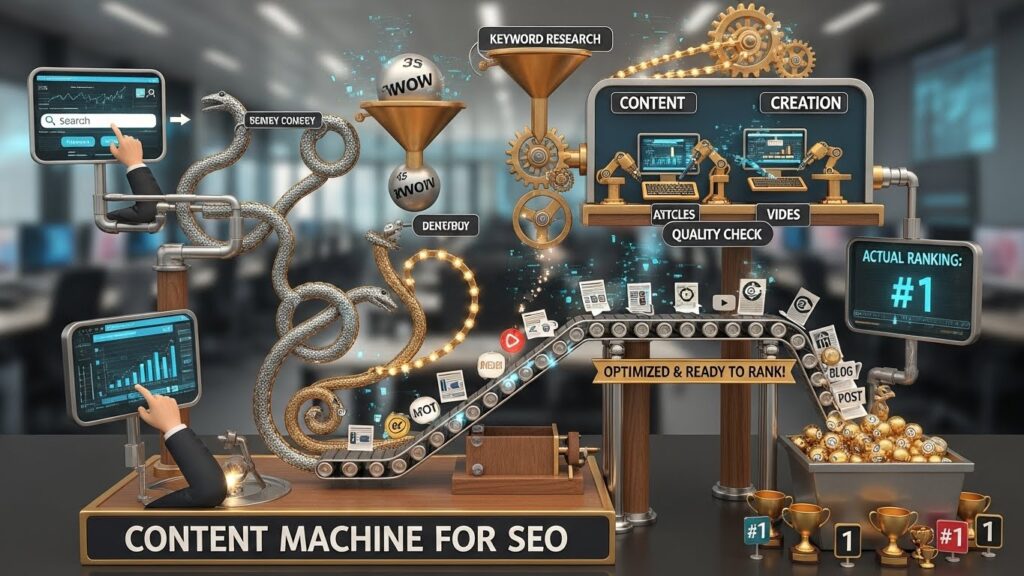
Look, I love writing, but I don’t love writing 60 listicle blog posts a year just to feed Google. Current stack:
- Custom GPT that knows my voice (trained on 400 old posts)
- Surfer SEO integration via API
- Generates 2,000-word outlines → full drafts → I edit for 30-45 minutes → publish.
We now rank on page 1 for best leather briefcase 2026, minimalist leather wallet, and 400+ long-tail terms we never would have targeted manually. Organic traffic tripled in 18 months while I barely touched the blog.
4. The “CEO Co-Pilot” Layer (Where It Gets Fun)
This is the part most owners miss. I built what I call my Executive OS:
- Every morning at 7:00 a.m., a Notion page auto-updates with:
Yesterday’s revenue broken down by channel, product, and country
Customer support SLA status
Cash balance and 90-day runway forecast
Top 3 anomalies (“Black briefcase search volume up 380 % in Toronto, possible influencer?”)
Three strategic suggestions written in my exact tone of voice.
It’s a combination of Make.com, Airtable, Stripe data, GA4, and Claude reading everything. Takes me seven minutes to scan and decide what (if anything) needs my attention that day.
The Tools That Actually Matter in 2025 (No Fluff)
Forget the 87-tool lists. This is literally what runs 99 % of our automation:
- Make.com (formerly Integromat) – the glue
- Airtable – single source of truth for products, vendors, customers
- Claude 3.5 / GPT-4o – writing, analysis, decision augmentation
- Gorgias – customer support + AI
- Klaviyo – email/SMS
- Modal or Replicate – running custom models is cheap
- Notion AI + custom databases – my second brain
- ChatGPT Teams + custom GPTs for niche tasks (leather care instructions, legal tone checker, etc.)
Total monthly cost: ~$680. Less than one part-time VA.
The Dark Side (Because Someone Has to Say It)
Automation isn’t magic. We’ve had:
- A pricing glitch in 2023 that listed $400 bags at $40 for 18 minutes (lost ~$22k before we caught it).
- AI support bot once told a customer we accept returns after 365 days because it misread the policy.
- Over-reliance on one model during the Anthropic outage last summer entire marketing team froze for six hours.
You must keep humans in the loop for exceptions, money movement, and anything that can bankrupt you. I still personally approve every PO over $15k and every refund over $500.
How to Start Tomorrow (Realistic 30-Day Plan)
Week 1: Pick ONE process that hurts the most (support, email copy, reporting). Document every step you do manually.
Week 2: Map it in Make.com. Even if you just automate moving data between apps, you’ll save hours.
Week 3: Add AI for text generation or decision making. Start with off-the-shelf integrations (Gorgias AI, Klaviyo + ChatGPT, etc.).
Week 4: Measure everything. If it didn’t save at least 5 hours or make/lose $1,000, kill it and try something else.
Final Thought
Automating a business with AI isn’t about replacing people; it’s about removing soul-crushing repetition so the humans (including you) can do the parts machines will never touch: taste, judgment, relationships, leaps of faith.
I still hand-write thank-you notes for our top 50 customers every Christmas. I still obsess over the smell of new leather when samples arrive. I still jump on Zoom when a whale wants a custom order. Those things didn’t get automated. They got protected.
The busywork died so the business could live. If a guy who taught himself to code on YouTube at 2 a.m. while fulfillment boxes stacked up in his living room can pull this off, trust meyou can too.
FAQs
Q: How much technical skill do you actually need?
A: Basic no-code comfort (Make.com, Zapier) gets you 70 % of the way. Everything else I learned from YouTube or hired a freelancer for $500-1,500 one-off tasks.
Q: Is it safe to let AI talk to customers?
A: Only if you (1) train it rigorously on your policies, (2) escalate on negative sentiment keywords, and (3) audit 5-10 % of conversations daily at first.
Q: What about job losses for my team?
A: We didn’t fire anyone. Support agents moved to retention & VIP concierge. Warehouse staff got bonuses from better cash flow. Growth paid for itself.
Q: Cheapest way to start right now?
A: Sign up for Make.com free tier + ChatGPT Plus ($20/mo) and automate one email flow this weekend. You’ll feel the hit immediately.
Q: Will Google penalize AI-written content in 2025?
A: They penalize low-quality content, not AI origin. Edit it, add personal stories, update quarterly, and you’re fine. All my top-ranking posts now are 80 % AI, 20 % me.

Related Posts