
Last fall, I sat across from my friend Mike at our neighborhood Portland coffee shop, staring at a stack of crumpled quote sheets spread across the sticky Formica table. Mike runs a small landscaping company with two part-time crew members, and he was burnt out. He’d spent the previous week working 12-hour days:
8 hours mowing lawns and trimming overgrown hedges, and 4 hours after dinner squinting at his phone replying to text messages, rescheduling rain-delayed appointments, and sending follow-up emails to clients who’d asked for a quote and never got back to him.
“I didn’t start this business to be a secretary,” he said, rubbing his red eyes.
I told him about a simple AI setup I’d put together for a residential cleaning client a few weeks prior, and offered to set it up for him for free to test. Three months later, he texted me a photo of a new flatbed trailer he’d bought with extra revenue. The AI was handling 90% of his booking and follow-up work:
It sent personalized quotes within 10 minutes of a client inquiry, sent gentle reminders 48 hours before appointments, and even followed up with past clients in October to offer discounted fall leaf removal packages. He cut his admin time from 15 hours a week to 2, and picked up 18 new clients that quarter because he was finally able to focus on doing good work instead of answering emails.
That’s the secret most AI hype pieces leave out: the most profitable AI business ideas right now aren’t about building next-generation large language models or self-driving delivery drones. They’re about solving boring, specific, underserved pain points for the 33 million small businesses in the U.S. that don’t have the budget for enterprise AI tools or a dedicated tech team.
1. Done-For-You AI Admin for Local Tradespeople
A 2025 National Federation of Independent Business survey found that 62% of small service business owners spend more than 10 hours a week on admin tasks. Most plumbers, electricians, and landscapers don’t want to learn a new software platform; they want someone to take the task off their plate entirely.
The business model here is simple: you act as their AI operations manager. You set up low-code workflows using tools like Zapier AI and ChatGPT to handle booking, quote requests, and follow-ups, then manage the system on their behalf for a monthly retainer.
I charge most of my trades clients $125 (200 a month, which is a fraction of what they’d pay for a part-time admin assistant. Mike now pays me 150 a month to manage his AI workflow, and he’s told me he’d happily pay double to keep that time free to focus on his crew and new projects.
2. AI Inventory Tuning for Specialty Retailers

Last spring, I worked with Lila, who runs a vintage clothing shop in Portland’s Alberta Arts District. She was stuck with (8,000 in overstocked 90s denim that wasn’t selling, but she was running out of linen blouses every two weeks. She’d been using a basic Google Sheet to track inventory, and she was guessing at restock levels based on gut feel.
I set up a simple AI model using Shopify’s built-in AI tools that pulled her sales data, local weather trends (Portland has mild, rainy summers, so heavy denim doesn’t sell well in June), and even Instagram hashtag usage for “vintage Pacific Northwest style” to predict exactly how many of each item to restock. Within two months, she cut her overstock costs by 35% and increased her monthly revenue by 28% by focusing on high-demand items.
The opportunity here is not building the AI yourself; it’s packaging off-the-shelf AI tools into a done-for-you service for specialty retailers (vintage shops, local pet supply stores, handmade craft sellers) that can’t afford Shopify Plus or a dedicated inventory analyst. I charge 400 for the initial setup and 75 a month for ongoing tuning.
3. AI Accessibility Auditing for Small Digital Brands
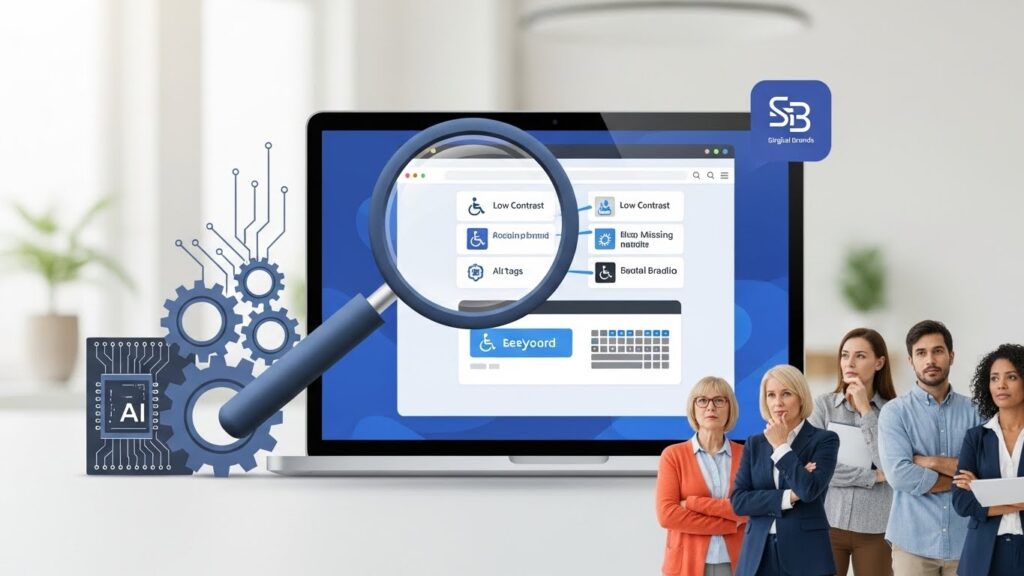
ADA lawsuits against small e-commerce stores have jumped 40% since 2023, per the American Bar Association, with average settlements hovering around 15,000. Most small store owners don’t realize their websites are out of compliance: 70% of Shopify stores lack proper image alt text for screen readers, and nearly half have checkout buttons with poor color contrast for visually impaired users.
An AI can scan a website in 5 minutes, generate corrected alt text, fix color contrast issues, and produce a full compliance report. I charge $300 per site for an initial audit and fixes, plus 75 a month for quarterly checks. Most clients pay immediately when I explain the risk of a lawsuit.
A Critical Note on Ethics
One rule I never break is transparency. I always let clients review sample AI-generated messages before they go out, and I make sure they know they can override any AI recommendation at any time. Mike still personally calls his top 10 clients every quarter to check in, even though the AI handles all other follow-ups. AI should augment human work, not replace
FAQs
- Do I need coding skills to start an AI business?
No. Most low-code AI tools let you build custom workflows without writing a single line of code. The key skill is listening to clients and understanding their pain points, not programming. - How quickly can I launch one of these businesses?
You can set up a basic AI follow-up workflow for tradespeople in a single afternoon and start pitching to local businesses the next day. - What’s the most common mistake new AI business owners make?
Chasing hype instead of solving a real problem. A lot of people rush to build chatbots for every business, but most small businesses don’t need a chatbot—they need help with the tedious admin work that’s eating into their revenue.

Related Posts