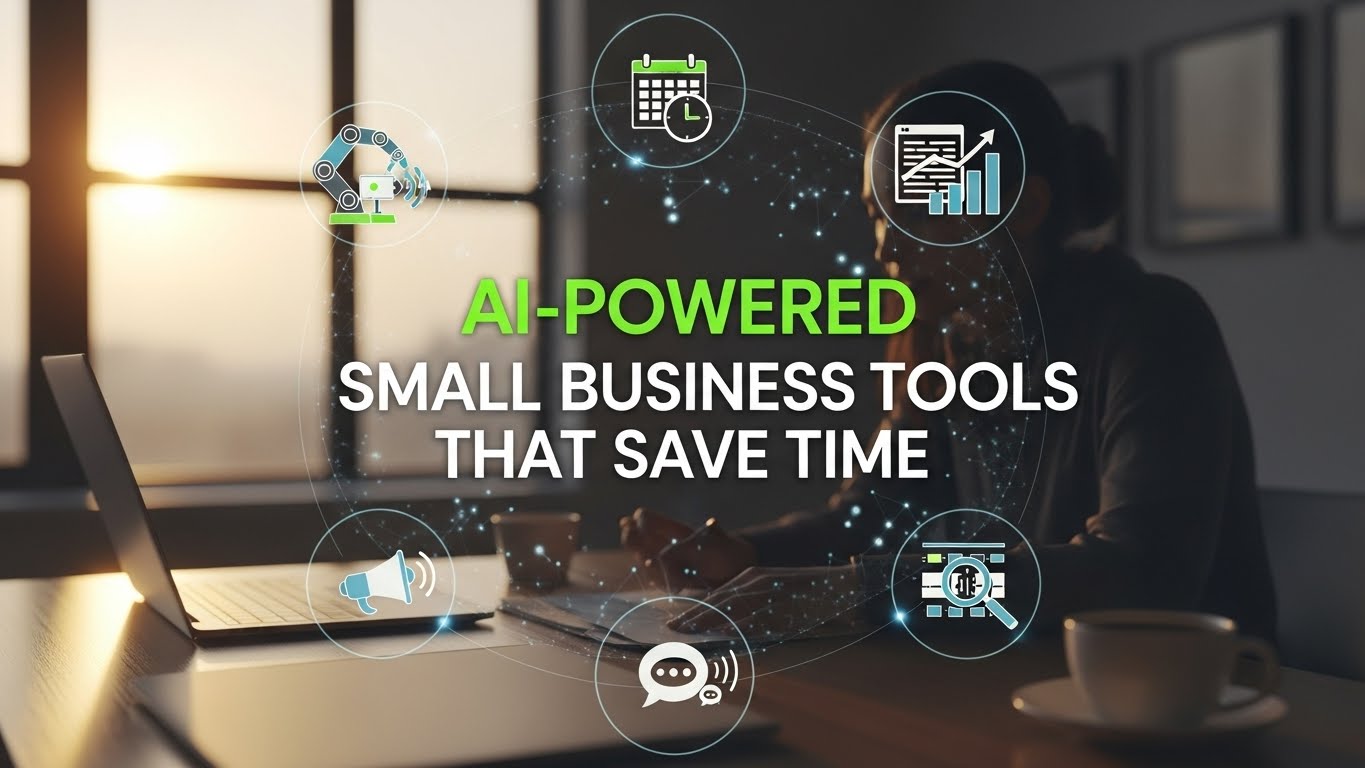

If you run a small business, you’ve probably felt the squeeze lately. You’re wearing more hats than evermarketing director, customer service rep, accountant, and sometimes even the janitor. The to-do list never shrinks, but the hours in the day remain stubbornly fixed.
For years, the buzzword “Artificial Intelligence” felt like something reserved for Silicon Valley giants with billion-dollar budgets and teams of data scientists. It seemed distant, complex, and frankly, expensive. But the landscape has shifted dramatically in the last 24 months. I’ve spent the better part of a decade consulting with small to medium-sized enterprises (SMEs), watching trends come and go.
Most fizzle out before they reach the Main Street level. AI, however, is different. It’s not a bubble; it’s a foundational shift in how work gets done. For the small business owner, AI has moved from a futuristic concept to a practical, accessible toolkit that sits right next to your accounting software and email marketing platform.
This isn’t about replacing human intuition or the personal touch that makes small businesses special. It’s about augmentation. It’s about taking the heavy lifting off your plate so you can focus on what actually drives growth: strategy, relationships, and innovation.
The Democratization of Intelligence
The barrier to entry has effectively vanished. Five years ago, implementing AI required custom coding, massive datasets, and expensive infrastructure. Today, it’s largely API-driven and embedded in the subscription software you’re likely already using.
Take Canva, for instance. It started as a simple graphic design tool for non-designers. Now, it’s “Magic Studio” suite uses AI to generate images from text, resize designs automatically, and write marketing copy. A local bakery owner I know in Ohio used to spend two hours every Sunday crafting social media posts.
Now, she prompts the tool with “cozy autumn vibes for a pumpkin spice latte,” and she has a dozen variations ready in minutes. That’s two hours back every week, 100 hours a year—she can now spend refining recipes or training staff. This democratization means you don’t need to understand the underlying algorithms to benefit from them. You just need to know what problem you’re trying to solve.
Practical Applications: Where AI Makes a Difference

To understand the impact, let’s break it down by the specific pain points small businesses face.
1. Marketing and Content Creation
Marketing is often the first casualty when a small business owner gets busy. Consistency is key, but it’s the first thing to slip. AI tools (like Jasper, Copy.ai, or even the free version of HubSpot’s content assistant) act as a relentless brainstorming partner.
They can draft blog posts, generate email newsletters, and create social media captions. However, the expert approach isn’t to copy-paste what the AI spits out. That’s a rookie mistake that leads to generic, soulless content.
The winning strategy is Human-AI collaboration. Use the AI to overcome the “blank page syndrome.” Let it outline the structure of your email campaign, then inject your brand’s specific voice, local references, and personal anecdotes. I recently advised a boutique fitness studio to use AI to draft their weekly newsletter.
They input the class schedule and a few key themes (e.g., “holiday recovery,” “New Year motivation”), and the AI generated the body text. The owner then added a personal story about a member’s progress. The result? A 40% increase in open rates because the content was consistent yet still felt personal.
2. Customer Service and Retention
Small businesses pride themselves on customer relationships, but answering the same three questions (“What are your hours?”, “Do you ship to Canada?”, “Is this in stock?”) 50 times a day is a drain on resources.
Enter AI Chatbots. I’m not talking about the clunky, frustrating bots of 2015. Modern Natural Language Processing (NLP) models allow for sophisticated, conversational interfaces. Tools like Tidio or Intercom can be trained on your specific website content and FAQs.
A small e-commerce store selling handmade leather goods implemented an AI chatbot to handle pre-sale inquiries. The bot answers questions about material sourcing, sizing, and shipping times instantly, 24/7. It captures leads when the owner is asleep.
Crucially, the bot is programmed to handle complex emotional issueslike a delayed custom order to a human immediately. This hybrid approach ensures customers feel heard, not processed, while freeing up the owner to handle high-value tasks.
3. Operations and Financial Management
This is where the “boring” but vital work happens. AI is revolutionizing back-office tasks, specifically in bookkeeping and inventory management. Software like QuickBooks Online and Xero now utilizes AI to automate data entry.
They categorize expenses, reconcile bank transactions, and even predict cash flow based on historical data. For a service-based business, this reduces the hours spent on manual bookkeeping and minimizes human error. In inventory management, AI tools analyze sales patterns to forecast demand.
A local retailer I worked with was constantly overstocking winter gear or running out of summer accessories in May. By integrating an AI-driven inventory plugin with their point-of-sale system, they could predict seasonal spikes with surprising accuracy. This reduced their holding costs by 15% in the first year alone.
The Human Element: Ethical Considerations and Limitations

While the efficiencies are tempting, we must approach AI with a critical eye. As a business owner, relying entirely on algorithms introduces new risks.
The “Hallucination” Problem:
Generative AI (like GPT models) can confidently state incorrect information as fact. If you use AI to write product descriptions or legal disclaimers without fact-checking, you risk damaging your credibility. I once saw a consultant use an AI tool to draft a contract clause for a client; the AI invented a legal precedent that didn’t exist. Always verify AI-generated content, especially in technical or legal fields.
Data Privacy:
When you upload customer lists, proprietary designs, or financial records to an AI platform, you are trusting it with your data. It is vital to read the terms of service. Are you training their model with your proprietary data? For sensitive information, look for enterprise-grade tools that offer data privacy guarantees or “opt-out” of training features.
The Loss of Nuance:
AI lacks emotional intelligence. It can mimic empathy, but it doesn’t feel it. In small businesses, where reputation is built on trust and personal connection, over-automation can be a turn-off. Customers can tell when they are interacting with a bot. The goal should be to use AI to handle the transactional, leaving the relational to humans.
How to Start (Without Overwhelm)
If you’re feeling overwhelmed, start small. Don’t try to overhaul your entire operation in a week.
- Audit Your Time: For one week, track where your time goes. Are you spending hours on repetitive writing? Data entry? Scheduling? Pick the most tedious, time-consuming task.
- Find the Right Tool: Don’t chase the shiniest new app. Look for AI features in tools you already use. Does your email provider offer AI composition? Does your design tool have an image generator? Start there.
- Run a Pilot: Pick one project. Maybe it’s automating your monthly newsletter or setting up a chatbot for your website. Test it, measure the results, and refine it.
- Train Your Team: If you have employees, involve them. Show them how AI can help them avoid burnout, not replace them. This builds buy-in and reduces fear.
The Future is Hybrid
The narrative that AI will replace small businesses is a myth. The reality is that small businesses using AI will replace those that don’t. The competitive edge isn’t just about having the best product anymore; it’s about having the agility to deliver that product efficiently.
AI allows a team of three to operate with the operational capacity of a team of ten. It levels the playing field, allowing small businesses to compete with larger corporations in marketing reach and customer service responsiveness.
However, the businesses that will thrive are those that remember that AI is a tool, not a strategy. The strategy remains the same as it ever was: solve a problem for your customer better than anyone else. AI just gives you a better shovel to dig with.
Frequently Asked Questions (FAQs)
Q: Is AI too expensive for a small business?
A: Not anymore. While enterprise AI solutions can be costly, there is a vast ecosystem of affordable (often $20–$50/month) or even free tools designed for small businesses. Many are subscription-based SaaS products that scale with your needs.
Q: Do I need to be tech-savvy to use AI?
A: You need to be open to learning, but you don’t need to be a coder. Most modern AI tools are designed with intuitive, user-friendly interfaces similar to other software you likely use. The key is understanding how to write a good “prompt” (instruction) to get the desired result.
Q: Will AI take my job or my employees’ jobs?
A: AI is more likely to change jobs than eliminate them. It excels at automating repetitive, low-value tasks (like scheduling or drafting basic emails). This frees up humans to focus on high-value activities that require creativity, strategy, and emotional intelligence skills that are currently irreplaceable.
Q: How do I ensure the content AI creates is original?
A: While AI generates content based on patterns in its training data, it rarely produces verbatim copies of existing text. However, it’s good practice to run important content through plagiarism checkers and, more importantly, to edit and add your unique perspective to ensure it aligns with your brand voice.
Q: What is the biggest mistake small businesses make with AI?
A: The biggest mistake is “set it and forget it.” Treating AI as a magic button that requires no human oversight leads to errors, brand misalignment, and missed opportunities. AI requires human direction, editing, and strategy to be truly effective.

Related Posts