
If you’ve been following the business technology landscape over the past few years, you’ve probably heard the term “AI automation solutions” tossed around in boardrooms, tech conferences, and even in casual conversations. But beyond the buzzwords, what does it really mean for a company to embrace AI automation?
As someone who’s worked with organizations at various stages of digital transformation, I can tell you it’s not just about robots replacing humans or plugging in some shiny new software. It’s about fundamentally reshaping how work gets done and often, how companies compete in their markets.
Let’s peel back the layers and look at what AI automation solutions actually are, where they’re making the biggest impact, and what real organizations are learning along the way.
What Are AI Automation Solutions?
At its core, AI automation refers to the use of artificial intelligence technologies to automate repetitive, rule-based, or complex tasks that traditionally required human input. This isn’t just about automating simple processes like payroll or email sorting.
Modern AI automation solutions can handle nuanced tasks think analyzing customer sentiment in support emails, predicting equipment failures before they happen, or dynamically optimizing supply chains in real time.
These solutions typically combine three main ingredients:
- Machine Learning (ML) and Deep Learning Models: These enable systems to learn from data and improve over time.
- Workflow Automation Platforms: Tools that orchestrate business processes, connecting data, decisions, and actions.
- Integration Layers: APIs and connectors that let AI “talk” to existing business systems—ERP, CRM, databases, you name it.
The result is a system that doesn’t just follow instructions but adapts, learns, and sometimes even makes recommendations beyond its initial programming.
Real-World Applications: Where AI Automation Shines

Let’s get practical. Here are a few areas where I’ve seen AI automation deliver tangible value:
1. Customer Service & Support
One of the earliest and most visible use cases is in customer support. Instead of waiting for a human agent, many companies now deploy AI-powered chatbots and virtual assistants. These aren’t your clunky, script-reading bots from a decade ago. Modern solutions can understand natural language, handle multi-turn conversations, and even detect emotional tone to escalate complex issues to humans when needed.
Example:
A financial services company I worked with reduced its average customer response time from hours to minutes using an AI automation system. The bot handled routine inquiries, processed simple transactions, and routed complex cases with all relevant information pre-filled. Human agents were freed up to deal with nuanced problems, boosting both efficiency and customer satisfaction.
2. Invoice Processing and Accounts Payable
Manual invoice processing is a pain point for many businesses. AI automation solutions now use optical character recognition (OCR) and natural language processing (NLP) to automatically extract data from paper and digital invoices, match them to purchase orders, and flag anomalies for review.
Case Study: A mid-sized manufacturing firm cut invoice processing time by 70% and slashed error rates by more than half after deploying such a system. The finance team went from dreading the monthly close to actually finishing ahead of schedule.
3. Predictive Maintenance in Manufacturing
Unplanned downtime is expensive. AI automation solutions analyze sensor data from machines to predict when maintenance should occur. These systems learn from historical data to identify subtle patterns that indicate a potential failure.
In one automotive plant I visited, predictive maintenance reduced equipment breakdowns by 40%. The ROI was clear: fewer emergency repairs, longer equipment lifespans, and happier production planners.
4. Recruitment and HR Onboarding
Recruiters are overwhelmed by resumes. AI automation tools can screen applications, rank candidates based on predefined criteria, and even schedule interviews. During onboarding, automated workflows can provision accounts, send training materials, and guide new hires through compliance steps.
5. Supply Chain Optimization
COVID-19 exposed the fragility of global supply chains. Now, many companies use AI automation to forecast demand, manage inventory, and reroute shipments in response to disruptions. These systems continuously ingest data from sales, weather forecasts, social media, and logistics partners to make real-time decisions.
The Benefits (and the Realities)
Let’s be honest: AI automation isn’t a magic bullet. But when implemented thoughtfully, the benefits are significant:
- Efficiency Gains: Repetitive tasks get done faster and with fewer errors.
- Cost Reduction: Fewer manual interventions mean lower labor costs and reduced rework.
- Better Decision Making: AI can surface insights and patterns that humans might miss.
- Scalability: Automated systems can handle increased workloads without proportional increases in staff.
However, the path to success isn’t always smooth. Here are some realities that every organization should consider:
- Data Quality Matters: AI is only as good as the data it’s trained on. Garbage in, garbage out.
- Change Management is Crucial: Employees may fear job loss or feel left behind. Successful projects invest in training and communication.
- Integration is Hard: Connecting AI models to legacy systems can be technically and politically challenging.
- Ethical and Bias Concerns: AI can unintentionally perpetuate biases present in training data. Regular audits and human oversight are essential.
- Continuous Improvement Needed: AI models “drift” over time. They need to be retrained and refined as business conditions change.
Choosing the Right AI Automation Solution
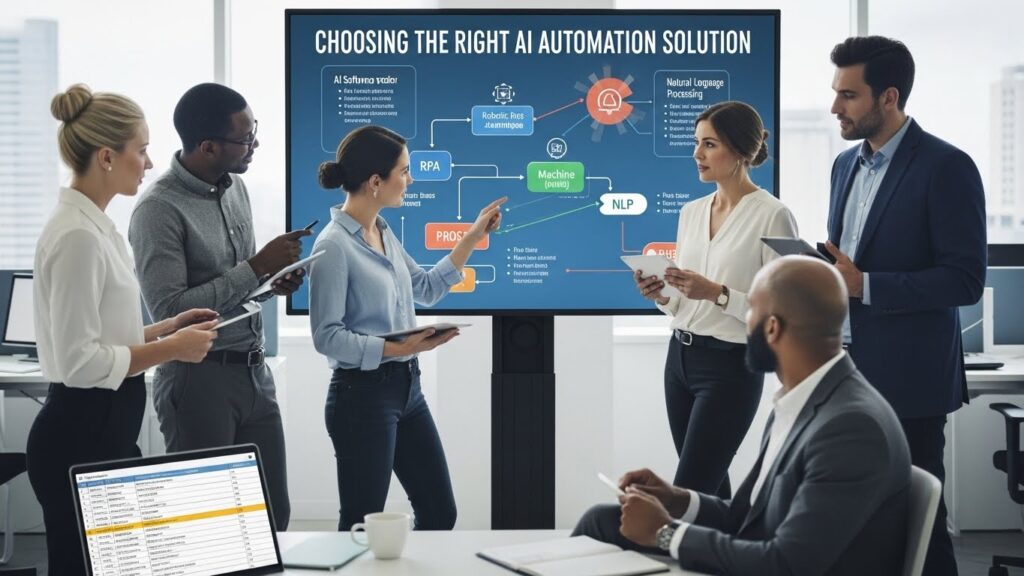
Not every problem needs an AI solution, and not every AI solution fits every company. Here’s how to approach the selection process:
- Start with Pain Points, Not Technology: Identify processes that are time-consuming, error-prone, or strategically important.
- Assess Readiness: Do you have the data, infrastructure, and talent to support AI? Be honest about gaps.
- Evaluate Vendors Carefully: Look for vendors with proven case studies in your industry. Avoid one-size-fits-all promises.
- Plan for Human-in-the-Loop: The best solutions combine automation with human oversight, especially for high-stakes decisions.
- Measure and Iterate: Define clear KPIs before deployment, and be ready to refine the system based on real-world performance.
The Future of AI Automation
AI automation is still in its early innings. As generative AI models like large language models become more accessible, we’ll see them embedded in more tools and workflows. Expect to see:
- More conversational interfaces for business processes.
- Greater personalization in customer experiences.
- Deeper integration of AI with Internet of Things (IoT) devices.
- Increased regulatory scrutiny and the need for explainability in AI-driven decisions.
But at the end of the day, technology is just an enabler. The real value comes from how organizations use these tools to empower their people, innovate faster, and create new value for customers.
FAQs
Q: What industries benefit most from AI automation solutions?
A: While almost every industry can benefit, sectors like finance, manufacturing, healthcare, logistics, and retail are seeing the most rapid adoption due to the volume of data and repetitive tasks.
Q: How much does it cost to implement AI automation?
A: Costs vary widely depending on the complexity of the solution, required integrations, and whether you build in-house or use off-the-shelf products. Entry-level solutions may start in the low five figures, while enterprise-grade deployments can run into hundreds of thousands or more.
Q: Will AI automation replace my employees?
A: It’s unlikely to replace entire workforces, but it will change roles. The best approach is to view AI as a tool that augments human capabilities, freeing people from drudgery to focus on higher-value work.
Q: How long does it take to see ROI from AI automation?
A: It depends on the use case and implementation approach. Some organizations see benefits in a few months, while others take a year or more, especially if legacy systems or organizational resistance are factors.
Q: What’s the biggest risk in adopting AI automation?
A: The biggest risk is failing to consider the human side. Poor change management, neglecting data quality, or ignoring ethical concerns can undermine even the most advanced technology.
Final Thoughts
AI automation solutions are not just a technological upgrade; they’re a strategic shift. Done right, they enable organizations to work smarter, innovate faster, and deliver better outcomes for customers and employees alike.
But success requires careful planning, a commitment to data quality, and above all, a willingness to put people at the center of the transformation. If you approach it with realistic expectations and a focus on value, AI automation can be one of the most powerful tools in your business toolkit.

Related Posts