
Over the past eight years, I’ve worked alongside startups, mid‑size firms, and Fortune 500 giants as they navigate the whirlwind of digital transformation. Nothing has generated more buzz, hope, and occasional anxiety than artificial intelligence (AI).
It’s no longer a futuristic concept confined to sci‑fi novels; it’s reshaping boardrooms, factories, customer service desks, and marketing departments today. In this article, I’ll share real‑world insights, challenges, successes, and lessons learned about the AI impact on business, drawn from hands‑on projects and countless conversations with CEOs, CTOs, and frontline employees.
From Hype to Reality: How AI Entered the Business World
Back in 2015, when I first pitched AI‑driven analytics to a manufacturing client, I was met with skeptical glances. “Isn’t that just a fancy spreadsheet?” one CFO asked. Fast forward to 2026, and that same company now runs an AI‑powered predictive maintenance system that cuts machine downtime by 32%.
The turning point arrived around 2018‑2019. Two key developments made AI practical for business:
- Cloud Computing Power: Affordable cloud platforms (AWS, Azure, GCP) put massive computing power in the hands of any business, eliminating the need for on‑site server farms.
- Big Data Maturity: Companies finally had clean, structured data to feed AI models.
Today, AI in business isn’t optional; it’s operational.
Key Areas Where AI Is Reshaping Business
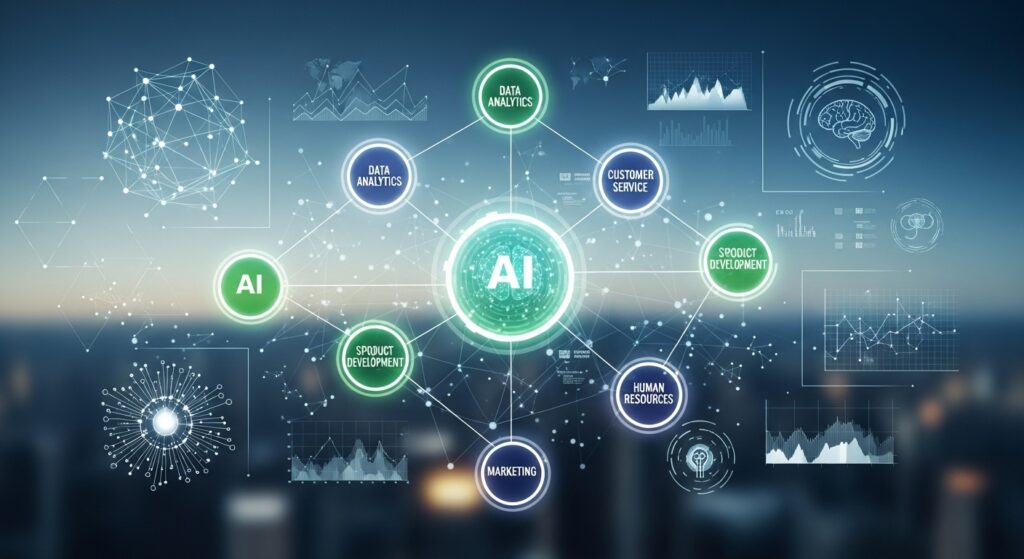
Below are the domains where I’ve witnessed the most profound AI impact on business. Each example comes from projects I’ve directly advised or implemented.
1. Operational Efficiency & Automation
The most immediate ROI from AI comes from automating repetitive tasks.
- Robotic Process Automation (RPA) + AI: A regional bank I consulted for used RPA bots to handle invoice processing. When they layered in AI‑based optical character recognition (OCR), accuracy jumped from 78% to 96%. The bots now process 15,000 invoices daily, tasks that once occupied five full‑time staff. Those employees were retrained to handle exception cases and client relationship roles, boosting overall productivity.
- Supply Chain Optimization: A food‑distribution company faced massive spoilage costs. We deployed an AI model that analyses weather data, traffic patterns, historical delivery times, and real‑time warehouse inventory. The result? Route optimization reduced fuel costs by 18% and cut spoilage by 27% in six months.
2. Data‑Driven Decision Making
Gone are the days of “gut‑feel” decisions. AI turns raw data into actionable intelligence.
A mid‑size apparel retailer struggled with inventory forecasting. Seasonal trends changed rapidly, and overstocking led to clearance sales eroding margins. We built a machine‑learning model that ingests sales data, social media trends, weather forecasts, and even influencer mentions. Today, the retailer’s stock‑out rate dropped from 14% to 4%, while excess inventory fell by 22%. As the COO told me: “We’re no longer guessing we’re knowing.”
3. Customer Experience Revolution
AI has redefined customer service and personalization.
- Chatbots & Virtual Assistants: A telecom provider I worked with deployed an AI chatbot for after‑hours support. It handles 70% of routine queries (billing, plan changes, troubleshooting) instantly. Human agents now focus solely on complex issues, reducing average handling time by 40% and increasing customer satisfaction scores (CSAT) from 68% to 89%.
- Hyper‑Personalization: An online bookstore uses AI to analyze browsing behavior, purchase history, and even reading speed. Their recommendation engine now drives 35% of total sales, up from 12% two years ago. Customers receive emails like, “Because you loved The Nightingale, we think you’ll adore this new historical fiction release.” It feels personal because it is personal.
4. Marketing & Sales Optimization
AI doesn’t just support marketing, it powers it.
- Predictive Lead Scoring: A SaaS company wasted thousands on sales outreach to low‑potential leads. We implemented an AI model that scores leads based on website activity, demo engagement, company size, and industry fit. Sales teams now prioritize top‑scoring leads, increasing conversion rates by 31% and shrinking sales cycles from 45 days to 28 days.
- Dynamic Pricing: Ride‑share platforms and airlines have used dynamic pricing for years, but AI now brings it to retail. A home‑goods e‑commerce site adjusts product prices in real‑time based on demand, competitor pricing, and inventory levels. During a recent supply shortage, the AI automatically raised prices on high‑demand items, protecting margins without alienating customers.
5. Human Resources (HR) Transformation

Hiring is one of the most time‑consuming HR functions until AI stepped in.
A tech startup receiving 5,000 résumé submissions per month used an AI‑based recruitment tool to screen candidates. The tool evaluates résumé data, LinkedIn profiles, and even conducts preliminary video interviews using natural language processing (NLP) to assess communication skills.
Hiring time dropped from 60 days to 22 days, and employee retention improved because hires were a better cultural fit. Crucially, we built bias‑mitigation safeguards into the model to ensure fairness; no AI tool should become a “black box” for hiring decisions.
6. Product Development & Innovation
AI isn’t just improving existing processes; it’s sparking entirely new products.
Consider generative design in manufacturing. An automotive supplier fed design constraints (weight, strength, material cost) into an AI algorithm. The AI generated 8,000+ design variations in hours. Engineers selected three viable options, two of which were previously unthinkable, that reduced part weight by 25% while maintaining safety standards. That’s innovation accelerated.
The Flip Side: Challenges & Pitfalls
While the AI impact on business is overwhelmingly positive, it’s not a magic wand. Here are the real hurdles I’ve encountered:
- Data Quality Issues
“Garbage in, garbage out” holds true. One logistics client spent $250K on an AI demand‑forecasting tool only to realize their warehouse data was riddled with duplicates and missing entries. Fix data first. Always conduct a data audit before AI implementation. - Hidden Costs
Beyond software licences, costs include data cleaning, integration with legacy systems, staff training, and ongoing model maintenance. A retail client underestimated these by 40%, delaying ROI. - Ethical Concerns & Bias
AI models learn from historical data. If past hiring data favoured a particular demographic, the AI will perpetuate that bias. Transparency is non‑negotiable. I now insist every AI project includes an Ethical AI Review Board comprising ethicists, legal, and HR reps. - Employee Resistance
Fear of job loss is real. Successful adoption hinges on change management. At a call‑center I modernised, we launched “AI Upskilling Weeks” where staff learned to manage AI tools, analyse outputs, and handle escalations. Turnover actually decreased by 15%. - Regulatory Uncertainty
Laws like the EU’s AI Act impose strict rules on high‑risk AI systems. Businesses must stay compliantconsult legal early in the project.
Best Practices for Adopting AI in Your Business
Based on a dozen successful rollouts, here’s my battle‑tested roadmap:
- Start Small – Pilot AI on a single, well‑defined problem (e.g., automating invoice processing). Prove ROI before scaling.
- Define Clear Objectives – “Increase conversion rate by 15% in Q4” is better than “Use AI.”
- Invest in Data Hygiene – Clean, labelled, and accessible data is your AI’s lifeblood.
- Prioritise Explainability – Choose tools that can explain why a decision was made (e.g., “Loan denied due to high debt‑to‑income ratio”).
- Upskill Your Team – Train employees to work with AI, not be replaced by it.
- Monitor Continuously – AI models drift over time. Schedule quarterly performance reviews.
The Future: What’s Next for AI in Business?
We’re only at the beginning. Emerging trends I’m watching closely:
- AI + IoT: Sensors on factory floors feeding real‑time data to AI for instant quality control.
- Generative AI for Content: Marketing teams now use generative AI to draft email campaigns, social posts, and even video scripts, freeing creatives for strategic work.
- AI‑Driven Cybersecurity: Predictive threat detection that spots anomalies before a breach occurs.
One prediction: By 2026, AI literacy will be as essential as basic computer skills for every employee.
Conclusion
The AI impact on business is profound, measurable, and here to stay. It drives efficiency, unlocks insights, delights customers, and fuels innovation. Yet, its success hinges on thoughtful implementation, ethical vigilance, and human oversight. AI isn’t replacing humans; it’s empowering them to do more meaningful work.
As I tell every client: “AI is a powerful engine. You’re the driver. Steer wisely.”
FAQs
Q1: Is AI only for large corporations?
No! Cloud‑based AI tools are affordable for SMEs. Many platforms (e.g., Google Vertex AI, Azure AI) offer pay‑as‑you‑go pricing, letting small businesses start with minimal investment.
Q2: Will AI replace jobs?
AI automates repetitive tasks, but it creates new roles (AI trainer, data ethicist, AI project manager). The focus shifts from routine work to strategic, creative, and interpersonal tasks.
Q3: How long does it take to see ROI from AI?
Most pilot projects show ROI within 6–12 months. Full‑scale deployments typically break even in 12–18 months.
Q4: Is AI secure?
Security depends on implementation. Use encrypted data pipelines, restrict access, and comply with regulations (GDPR, CCPA). Never feed sensitive personal data into unsecured AI tools.
Q5: Can AI make biased decisions?
Yes, if trained on biased data. Always audit AI outputs for fairness and include diverse data sets.
Q6: Do I need data scientists to use AI?
Not necessarily. Many modern AI platforms feature “no‑code” interfaces. However, having at least one data‑literate team member is highly recommended.

Related Posts