I remember sitting across from Sarah, a small-business owner who ran a boutique marketing agency. Three years ago, she was drowning in spreadsheets, manually analyzing client campaign data, and juggling a dozen tools for email, social media, and reporting. Her team spent more time processing information than acting on it.
Today? She logs into a single AI-powered platform that doesn’t just track metrics, it predicts which clients are likely to churn, drafts personalized email sequences, and even suggests ad copy tweaks. “It’s like having a senior analyst on retainer,” she told me, “but without the $150-an-hour price tag.” That’s the magic of AI SaaS platforms, and they’re no longer a futuristic luxury. They’re quietly becoming the backbone of modern business operations.
What Exactly Is AI SaaS? (Beyond the Buzzwords):
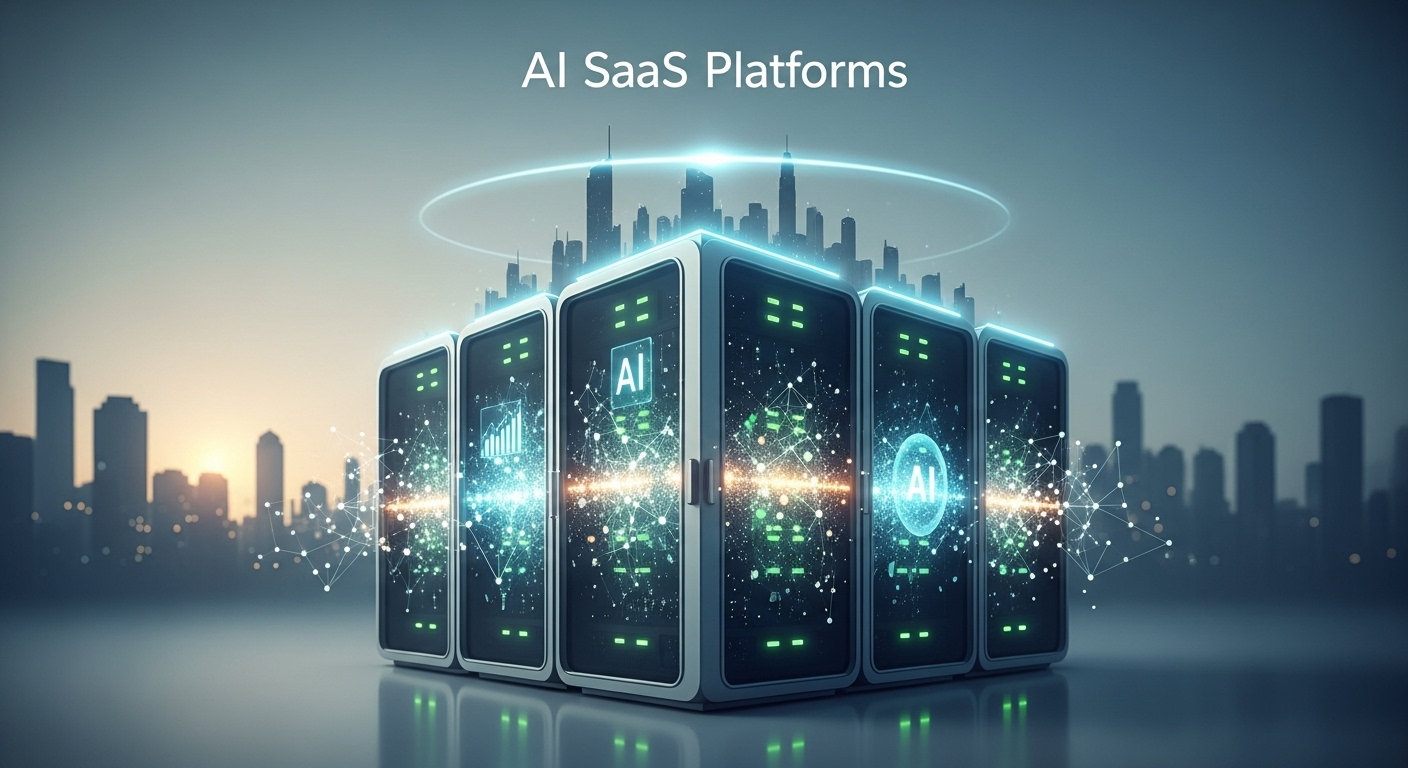
Let’s cut through the noise. AI SaaS platforms are cloud-based software applications that embed artificial intelligence, machine learning, natural language processing (NLP), or computer vision into their core functionality. Unlike traditional SaaS (Software-as-a-Service), which simply delivers tools via the internet (like Gmail or Salesforce), AI-enhanced SaaS learns, adapts, and anticipates. It’s not just automating repetitive tasks; it’s transforming raw data into actionable insights.
Take customer relationship management (CRM). A basic CRM logs interactions. But an AI SaaS CRM (like HubSpot’s Sales Hub or Zoho CRM) might analyze email sentiment to flag frustrated clients, prioritize leads based on conversion probability, or auto-generate follow-up reminders. The intelligence isn’t bolted on; it’s woven into the user experience.
Why Businesses Are Leaning In (The Real-World Payoff):

I’ve seen this shift firsthand. Over the past two years, I’ve consulted with over a dozen SMBs and mid-sized enterprises adopting AI SaaS.
The drivers? Three big ones:
- Democratizing Expertise: Small teams often lack data scientists. AI SaaS levels the playing field. A local bakery, for instance, uses Toast’s AI-driven platform to forecast demand based on weather, holidays, and past sales. No PhD required, just intuitive dashboards.
- Hyper-Personalization at Scale: E-commerce brands like Stitch Fix leverage AI SaaS (built in-house or via tools like Dynamic Yield) to curate boxes tailored to individual preferences. The result? Higher conversion rates and customer loyalty.
- Predictive Power Over Reactive Fixes: Manufacturing firms I’ve worked with use platforms like Uptake or PTC ThingWorx to predict equipment failures before they happen. One client cut downtime by 30% in six months.
But here’s the catch: AI SaaS isn’t a magic wand. It thrives on good data. I once worked with a retailer whose AI-powered inventory tool kept overstocking seasonal items. Why? Their historical sales data was messy, with missing entries from a legacy system. The lesson? Garbage in, gospel out.
Industry-Specific Wins (Beyond the Hype):
AI SaaS isn’t one-size-fits-all. Its value shines when tailored to domain-specific needs:
- Healthcare: Platforms like Olive automate administrative tasks (prior authorizations, billing), freeing clinicians to focus on patients. During the pandemic, some hospitals used AI SaaS to predict ICU bed shortages.
- Finance: Tools like Plaid or Yodlee (now Envestnet) use AI to analyze transaction data for fraud detection or personalized financial advice.
- Real Estate: Zillow’s “Zestimate” (powered by AI SaaS) estimates home values by crunching public records, market trends, and even neighborhood amenities.
One standout case? A regional bank I advised implemented an AI SaaS chatbot for customer service. Within three months, it handled 60% of routine inquiries (balance checks, transaction history), reducing wait times and cutting operational costs by 25%. But they also faced pushback; older customers preferred human interaction. So they designed a “human handoff” feature, blending AI efficiency with personal touch. That’s the sweet spot.
The Caveats: It’s Not All Smooth Sailing:

Despite the promise, AI SaaS platforms come with hurdles. Here’s what I’ve observed:
- Integration Headaches: Many businesses use a patchwork of tools (Slack, QuickBooks, Shopify). Getting AI SaaS to talk to legacy systems can be complex and costly.
- Data Privacy Concerns: With regulations like GDPR and CCPA tightening, companies worry about where their data lives. A healthcare client recently paused an AI SaaS rollout because the vendor stored data in a non-compliant region.
- Bias and Transparency: AI models can inherit biases from training data. For example, an AI SaaS hiring tool might inadvertently favor certain demographics. Responsible vendors now offer “bias audits” and explainable AI (XAI) features.
- The “Black Box” Problem: Users often distrust AI recommendations they don’t understand. A sales team I worked with ignored an AI SaaS lead-scoring tool until we walked them through why certain leads were prioritized.
Ethically, businesses must ask: Is this AI enhancing human judgment, or replacing it? At its best, AI SaaS acts as a co-pilot. At its worst, it erodes accountability.
What’s Next? Trends I’m Watching:
The AI SaaS landscape is evolving fast. Based on industry conversations and vendor roadmaps, here’s where it’s heading:
- Vertical-Specific AI: More platforms will cater to niche industries (e.g., AI SaaS for law firms, construction, or agriculture).
- No-Code AI Builders: Tools like MonkeyLearn or Lobe are making it easier for non-technical users to train custom models.
- AI-Powered Collaboration: Imagine a project management tool (like Asana) that auto-assigns tasks based on team members’ workloads and skills.
- Sustainability Focus: AI SaaS optimizing energy use (e.g., Google’s DeepMind for data center cooling) could become a key differentiator.
But caution: Hype often outpaces practicality. I’ve seen vendors promise “AI-driven” solutions that are just basic automation with a fancy label. Always ask for concrete use cases and ROI metrics.
Choosing the Right AI SaaS Platform: A Pragmatic Checklist:
If you’re considering adoption, here’s what I recommend (from hard-won experience):
- Start Small: Pilot one use case (e.g., email marketing automation) before scaling.
- Demand Data Clarity: How is data ingested? Where is it stored? Can you export it?
- Test for Bias: Request examples of how the platform handles edge cases.
- Prioritize UX: If it’s not intuitive, your team won’t use it.
- Check References: Talk to current customers about implementation pain points.
Remember: The best AI SaaS solves your problem, not a vendor’s agenda.
The Bottom Line: AI SaaS as a Catalyst, Not a Replacement:
AI SaaS platforms aren’t here to replace humans. They’re here to amplify what humans do best: creativity, empathy, and strategic thinking. Sarah’s agency now uses AI to handle data grunt work, freeing her team to focus on crafting compelling narratives. The bakery owner spends less time guessing and more time innovating new recipes.
But success hinges on thoughtful adoption. Treat AI SaaS as a partner, not a panacea. Invest in data hygiene, train your team, and stay vigilant about ethical implications. As the technology matures, the businesses that thrive won’t be those with the most advanced AI, but those who use it to enhance human potential.
The revolution isn’t loud. It’s happening quietly, one optimized workflow, one predicted trend, one happier customer at a time. And if you’re not exploring how AI SaaS can fit into your story? You might just be the one left holding the spreadsheet.
FAQs
Q: What’s the difference between AI SaaS and traditional SaaS?
A: Traditional SaaS delivers software via the cloud (e.g., Microsoft 365). AI SaaS embeds intelligence (like predictive analytics or chatbots) to automate decisions or insights, not just tasks.
Q: How secure are AI SaaS platforms?
A: Security varies by vendor. Look for SOC 2 compliance, encryption, and data residency options. Always review their privacy policy, especially if handling sensitive data (e.g., healthcare or finance).
Q: Can small businesses afford AI SaaS?
A: Yes! Many vendors offer tiered pricing (e.g., $30–$200/user/month). Start with a pilot for one function (like email automation) to test ROI before scaling.
Q: What industries benefit most from AI SaaS?
A: Retail, healthcare, finance, and manufacturing see the highest ROI. But any data-driven industry (e.g., real estate, marketing) can leverage it.
Q: How do I avoid “AI washing” (vendors overhyping their AI)?
A: Ask specific questions: “Can you share a use case with metrics?” “How is the AI trained?” Avoid vendors who can’t explain their models simply.

Related Posts